
Wills vs. Trusts: What Is the Difference and Which Is Right for You
When it comes to estate planning, two of the most common tools are wills and trusts. Both are designed to help you protect your assets and provide for your loved ones after your passing, but they work in different ways. Understanding the differences can help you choose the right strategy for your family and ensure your wishes are carried out efficiently.
What Is a Will?
A will is a legal document that outlines how your assets will be distributed after your death. It also allows you to name guardians for minor children and designate an executor to carry out your wishes.
Key features of a will:
Takes effect only after your death
Must go through probate, which is the legal process of validating a will and distributing assets
Can be updated or revoked at any time while you are alive
Provides clear instructions for the distribution of property and appointment of guardians
A will is often the foundation of an estate plan, but it may not provide as much flexibility or privacy as other tools.
What Is a Trust?
A trust is a legal arrangement in which a trustee holds and manages assets on behalf of beneficiaries. Trusts can be created during your lifetime (living trusts) or through your will after death (testamentary trusts).
Key features of a trust:
Can avoid probate, allowing assets to pass directly to beneficiaries
Offers more privacy than a will, as trust documents are generally not public
Can provide detailed instructions on how and when assets are distributed
May offer protection from creditors or legal challenges, depending on the type of trust
Trusts are often used for more complex estate plans, especially when you want to control the timing or conditions of distributions to heirs.
Key Differences Between Wills and Trusts
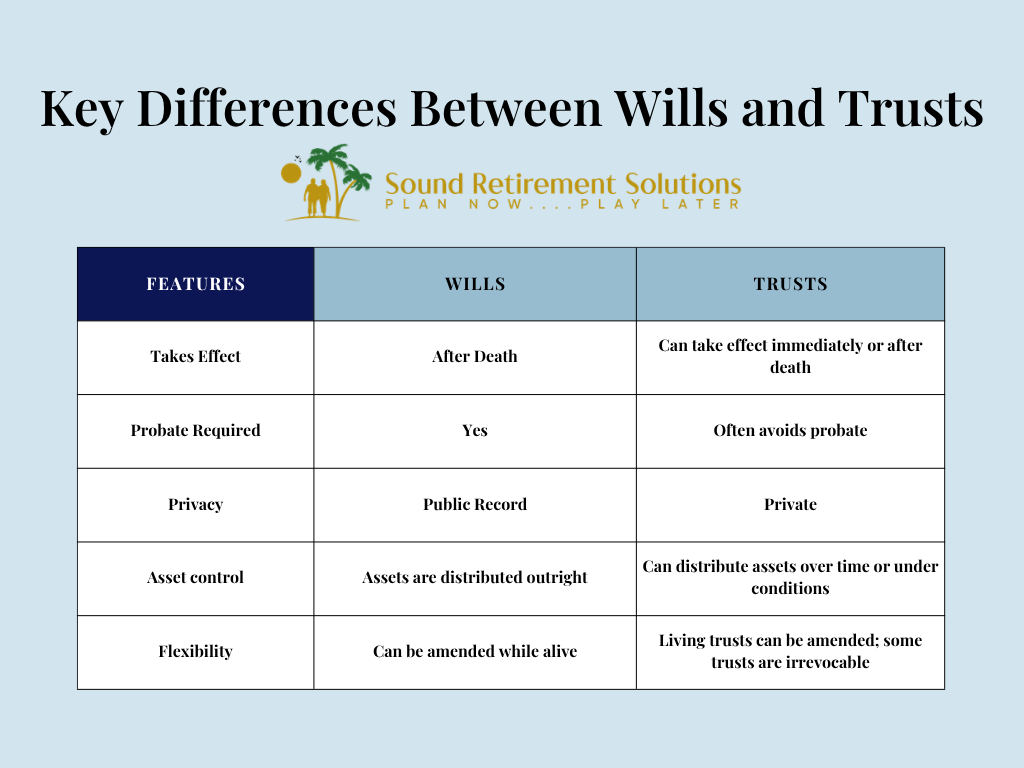
Understanding these differences is crucial to selecting the tool that best meets your goals.
Which Is Right for You?
The choice between a will and a trust depends on your unique situation, goals, and the complexity of your estate:
Simple estates: If your assets are modest and you want a straightforward plan, a will may be sufficient.
Privacy concerns: If you want to keep your estate details private, a trust may be a better choice.
Complex family situations: Trusts can help manage inheritances for minor children, blended families, or beneficiaries with special needs.
Avoiding probate: Trusts can streamline the transfer of assets and reduce delays in distribution.
In many cases, a combination of both may provide the most comprehensive protection. For example, you might have a living trust to manage your assets during your lifetime and a will to cover any property not included in the trust.
Updating Your Estate Plan
Regardless of whether you choose a will, a trust, or both, it’s important to review your estate plan regularly. Life changes such as marriage, divorce, the birth of children, or significant financial changes may require updates to your documents.
Working With a Retirement Planner
Estate planning can be complex, and mistakes can have long-lasting consequences. A retirement planner can help you:
Determine whether a will, trust, or combination is right for your family
Ensure your estate plan aligns with your retirement goals and income strategy
Coordinate your estate plan with other elements such as life insurance, long-term care planning, and over 65 healthcare
Professional guidance ensures that your assets are protected, your wishes are honored, and your loved ones are supported.
Take Action Today
Wills and trusts are powerful tools to protect your family and preserve your legacy. Understanding the differences and how each works allows you to make informed decisions about your estate plan.
The team at Sound Retirement Solutions can help you evaluate your options, create a comprehensive estate plan, and ensure that your family is prepared for the future.
Schedule a consultation today to take control of your estate planning and secure peace of mind for you and your loved ones.